


Community school in Norrköping, Sweden – at Technical University of Eindhoven, The Netherlands – 2014
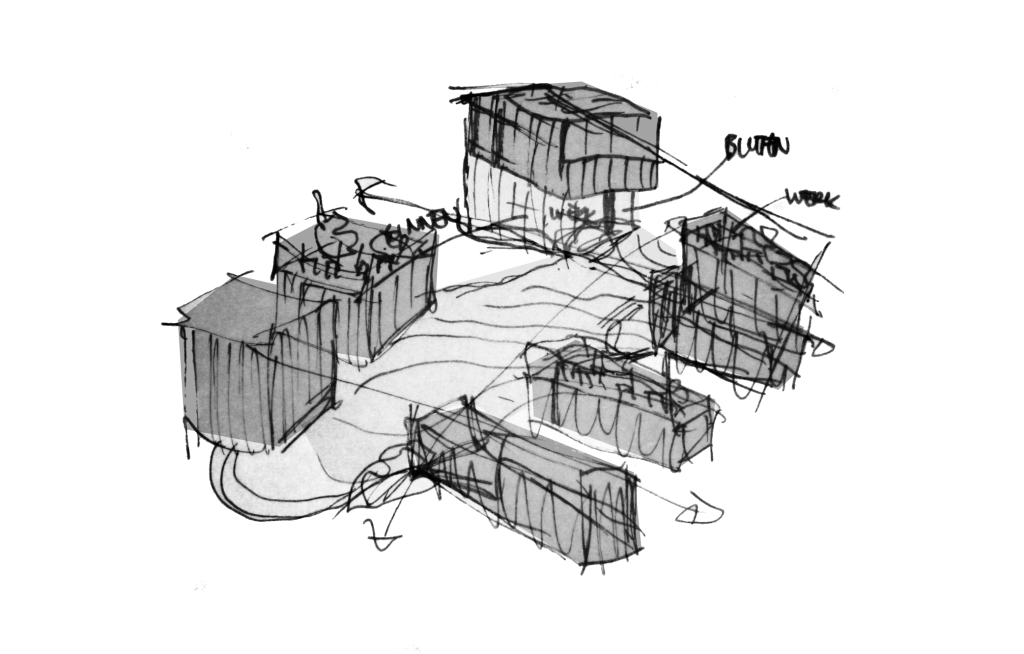
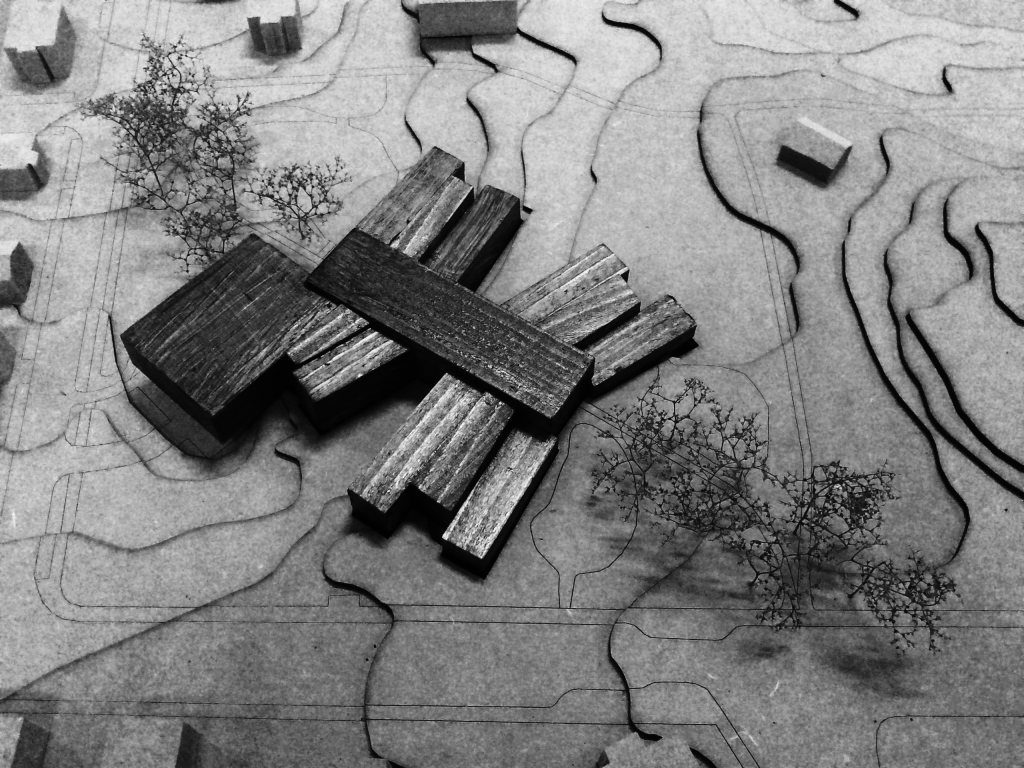
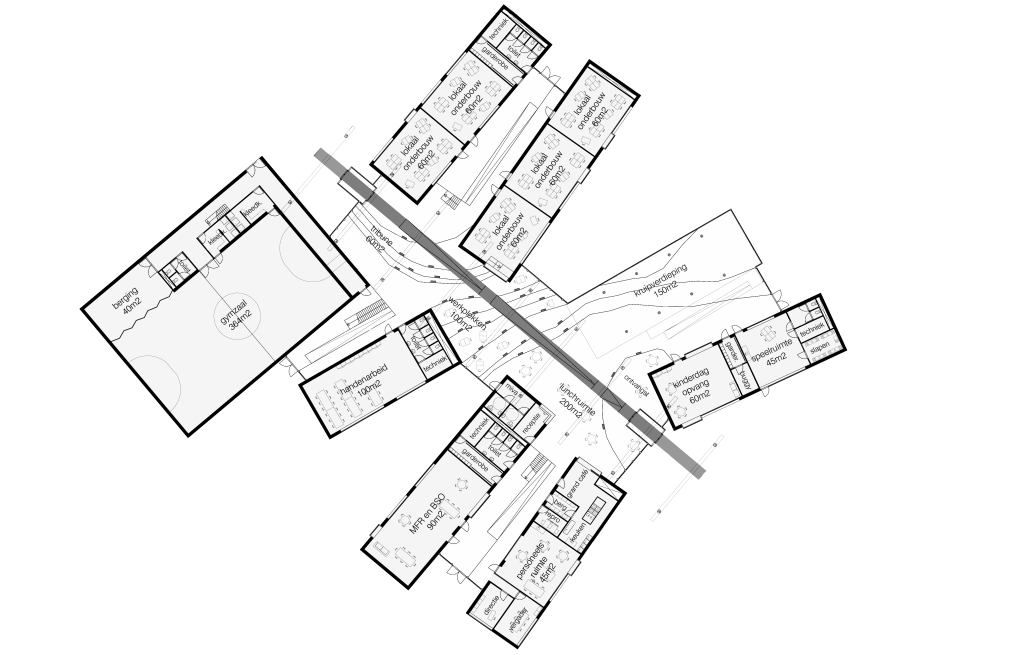
As part of the graduation studio ‘Learning is Living’ a community school in the Swedish city Norrköping was designed. The school is located in the middle of neighborhood Kneippen in Norrköping. A central meeting point for the residents is missing in Kneippen, therefore a community school could be very useful to bring together different groups of people from Kneippen. At the south side of the school the main road Linköpingsvagan is located, this is the road from where most visitors and children will arrive. By creating a terrace at this side of the school and also the main entrance, the building will be easy accessible.
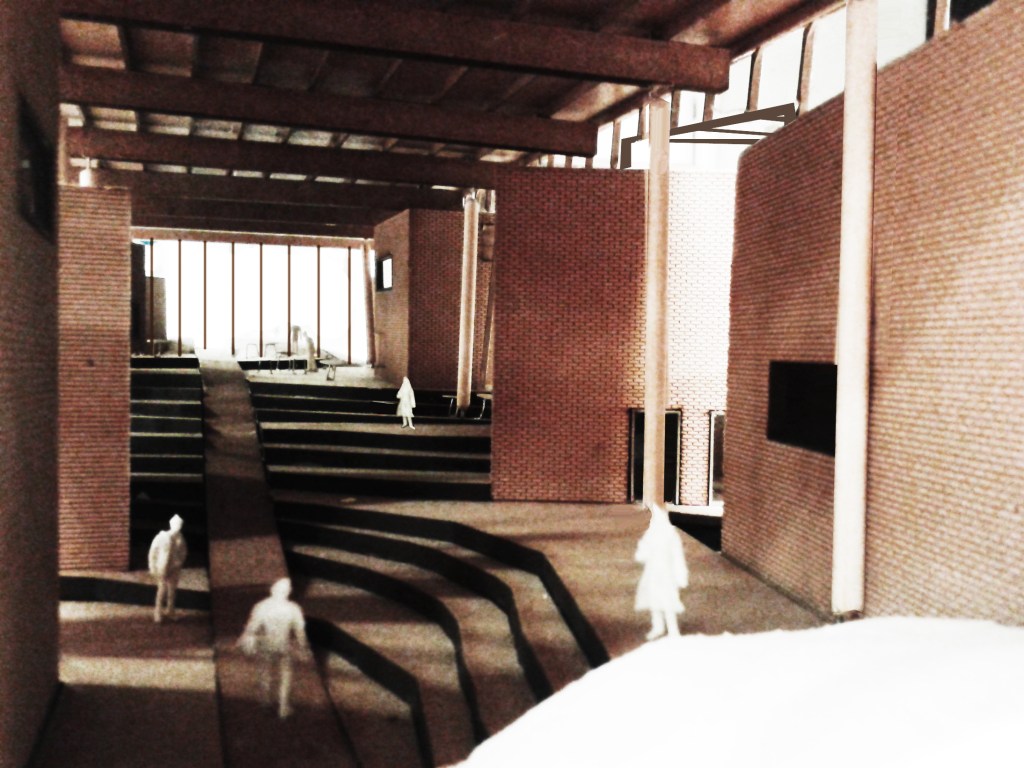
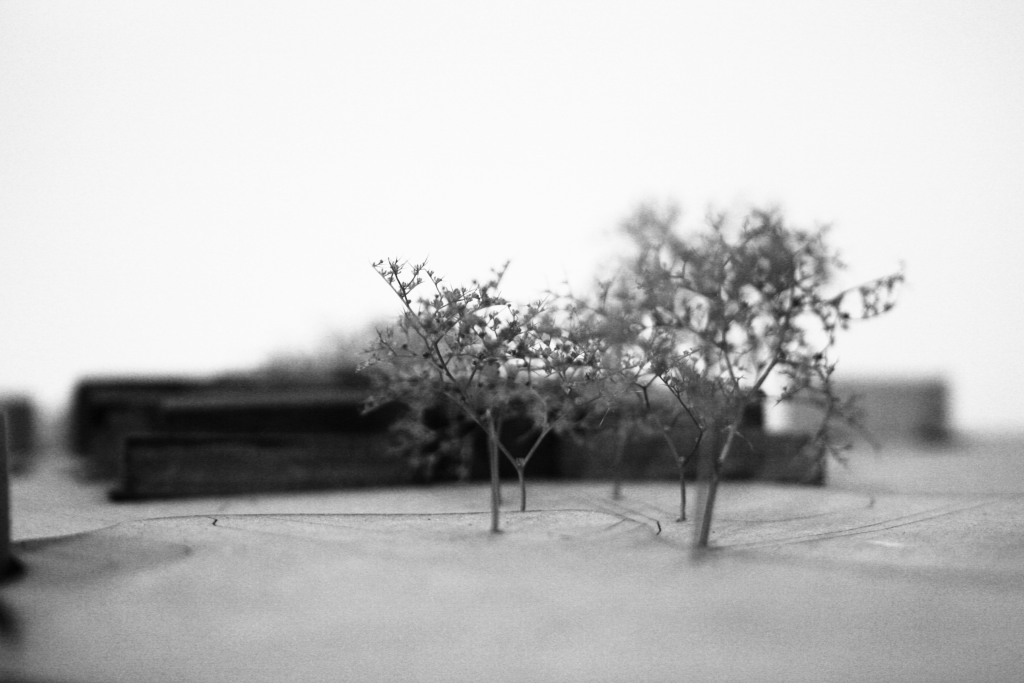
The entrance will be initiated and guided by a row of trees and a wooden path outside the school. The row of trees will be replaced by a wooden construction inside the school at the multifunction space. The row of trees outside and the wooden construction inside the school are an extension of the Southern promenade of Norrköping. The muntifunctional space inside the school has the appearance of a promenade by its wooden construction.
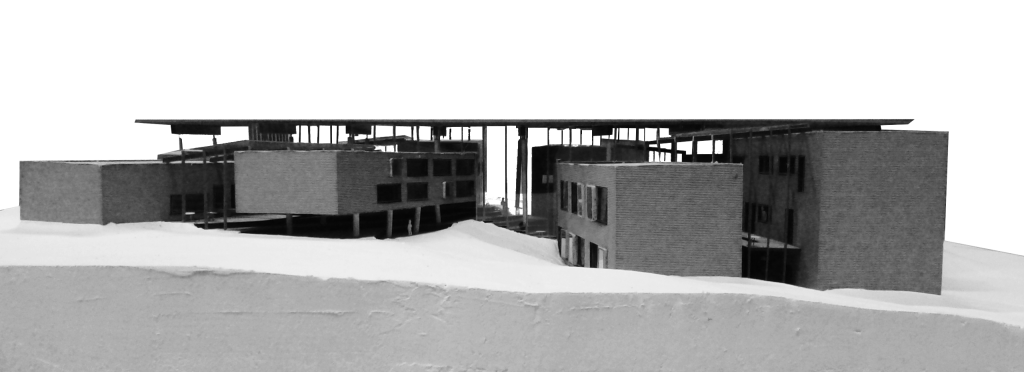
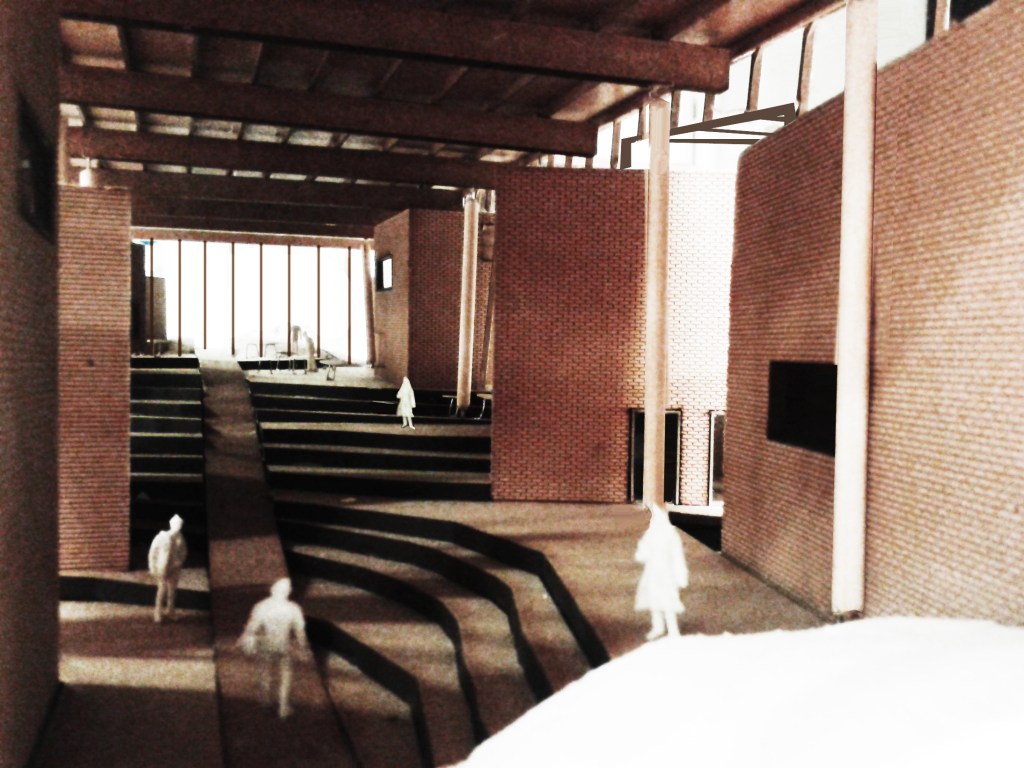
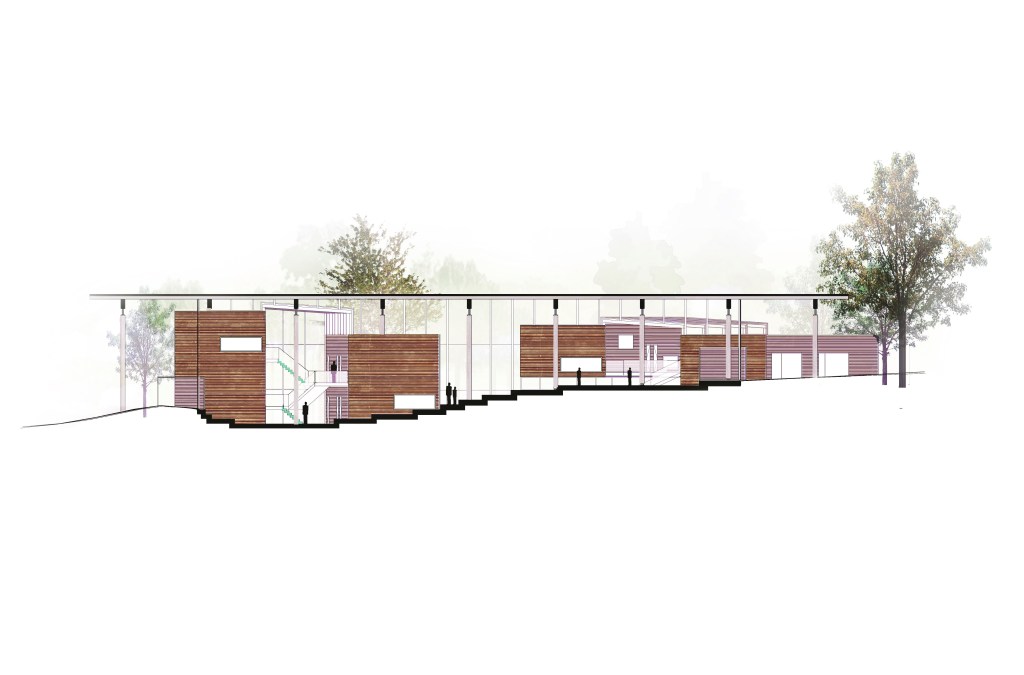
The multifunctional space follows the natural slope of the landscape by a floor that functions as one big stairs. Thereby the space has different heights which adapt to the growth of the children inside the school. The young children are located in the south where the ceiling height is not very high and the older children are located in the north where the space becomes naturally higher because of the slope.
Spaces are created in the building where the sensory experience and curiosity are stimulated. Lifting up the wing where the toddlers are located results in a low level where only the youngest children can stand up and play. This ensures the child feels more protected, safe and comfortable by the small scale of the space. A much bigger scale is created at the primary school wing, where instead working spaces are created on the top floor of the wing. The older children will get more exited with the higher spaces and they will get a nice view over the playground. Indoor see-through windows, stimulate the children to get in contact with other spaces in the building. This creates liveliness and curiosity in the school.
Certain elements in the school will give -next to their main function- suggestions for other activities, whereby the child will get more opportunities to play. This is done with the step stones. Next to the function of stairs these stones can be used to build something and create seats by stacking them. Because these step stones are made of different materials they sound and feel all different when you step on them, whereby the child gets knowledge about different materials.
The ambition was to create an optimal daylight experience in the building and a clear orientation. Colour is used in a way that important public spaces are more visible, which improves the orientation. The corridors are made more attractive by daylight entrance, what makes it more pleasant to enter these corridors.
 Studio Jet Tillmann